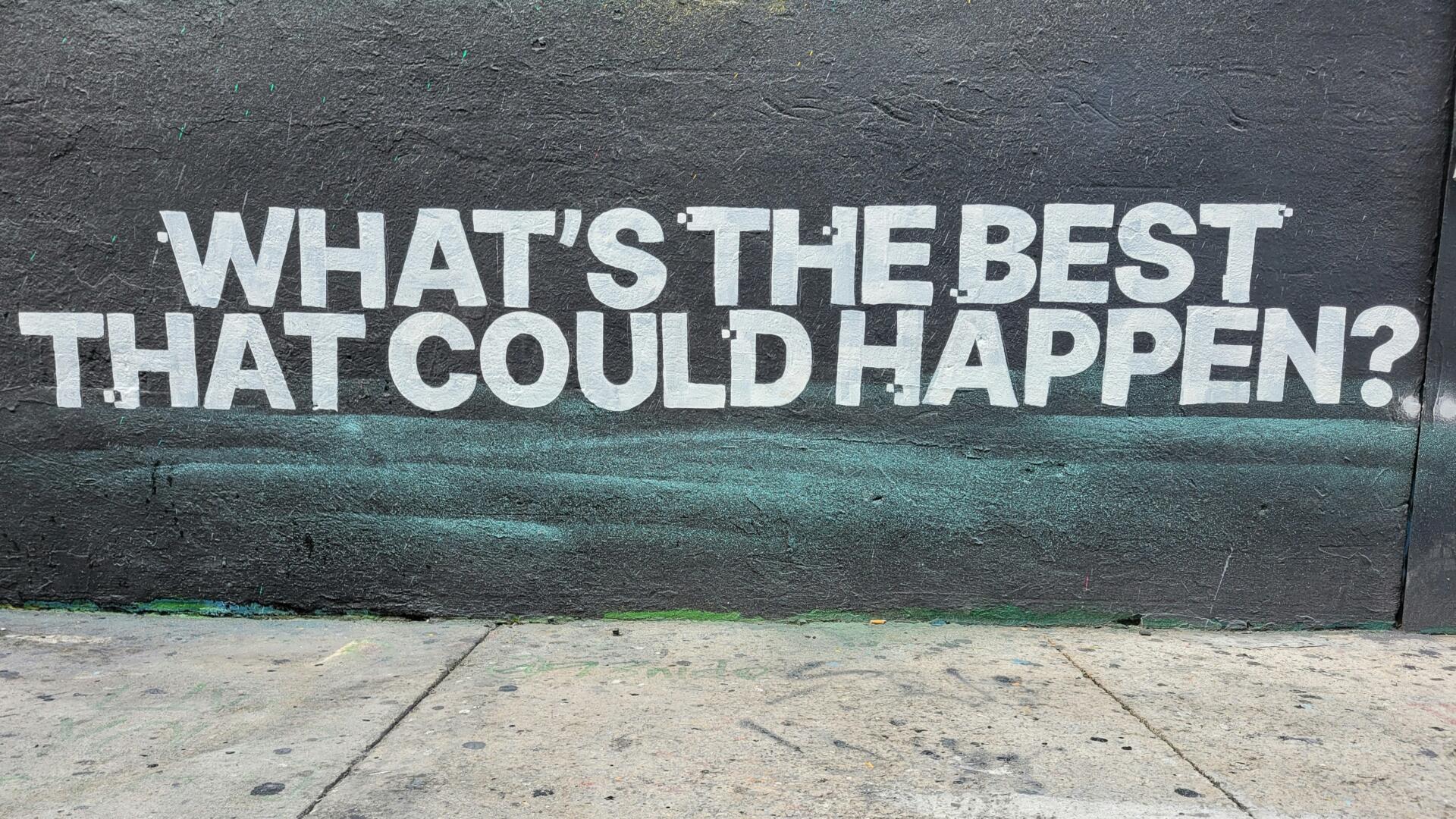
 Education
Build More of What Works


A commercial corridor in Dallas had been struggling for years, until Jason Roberts and a loose coalition of neighbors showed up and temporarily transformed it. Pop-up cafés. Outdoor seating. Trees. Street musicians. For two days, the block looked and felt like the neighborhood people had always believed it could become.
Roberts improved a neighborhood block in a weekend. No budget. No permit.
Long-term investment followed within a few years. Businesses moved in. The corridor came alive. What shifted first had nothing to do with infrastructure or policy. People started believing the place was worth betting on, and that belief turned out to be the harder and more important thing to move.
Most of us are trained to start somewhere else entirely.
When something feels off, correction seems like the responsible response. Over time, that instinct reshapes how entire systems operate. Conversations organize around problems. Energy gets consumed by diagnosis. Gradually, the vocabulary of a place becomes the vocabulary of its failures.
Cities have built whole layers of infrastructure around this logic. Over the past decade, 3-1-1 systems, mobile reporting apps, and online complaint forms have made it easier than ever to flag what’s broken. The awareness has never been higher.
The problems, largely, remain.
Reporting creates a loop more often than it creates resolution. Someone notices something broken, files a report, waits. When nothing changes, they escalate or walk away. Do that enough times and participation often just…stops.
The research on how change actually happens points in a consistent direction: leading with problems rarely moves them.
Organizational theorist Karl Weick documented what he called “small wins,” showing how meaningful progress tends to emerge from modest, successful actions that get repeated and extended, not from sweeping interventions aimed at large problems. David Cooperrider and colleagues developed Appreciative Inquiry around a similar observation: organizations grow stronger when attention moves toward existing strengths than when it stays fixed on deficits. In public health, the positive deviance framework showed that even in severely constrained environments, some individuals consistently achieve better outcomes by doing things differently.
Change tends to grow from what is already working.
When a community or organization starts paying attention to what’s actually functioning — the connections forming, the small solutions holding — something shifts in the people involved. Visible success pulls people toward it. It answers a question people need answered before they commit: is this worth my time?
It also builds a different kind of institutional memory. Successful actions accumulate into patterns. What worked once gets tried again, refined, shared. The system starts learning from its own experience instead of just cataloguing its wounds.
Some things are broken and need fixing, and pretending otherwise is its own kind of paralysis. But where a community directs its primary attention shapes what kind of community it becomes. Systems organized around failure get very good at finding it. Systems that also invest in understanding and spreading what works develop something harder to manufacture: momentum that doesn’t require a crisis to sustain it.
When Roberts launched the Better Block project in 2010, it didn’t fix Oak Cliff. But for two days, people walked through a version of their street that felt alive — and that turned out to matter more than anyone expected. The conversation shifted from why this place can’t be saved to how we build on what we just saw. The infrastructure came later. The belief came first.
The question is not whether we should fix what is wrong. It is where we choose to begin, and what we choose to amplify.
Ways to put this into practice
Start your next meeting with a different question. Before the agenda, before the status updates, ask the room: what’s working right now? It sounds simple, but it surfaces information that problem-focused check-ins miss. Do it consistently and the answers start building.
When something goes right, document it specifically. Vague success stories don’t travel. When a program lands, a partnership forms, or a local solution takes hold, capture exactly what happened and why it worked. The specificity is what makes it useful to someone else trying something similar.
Look for the people getting better results with the same resources. In any community or organization, some people are quietly outperforming the conditions around them. Find them. Understand what they’re doing. The positive deviance framework is built on the observation that the answers are usually already inside the system.
Try a demonstration before a proposal. The Better Block model works because it makes an idea walkable. Before writing a grant, launching a campaign, or presenting a plan, ask whether there’s a way to show people a small version of it first. A temporary, low-stakes demonstration is often more persuasive than the most well-argued proposal.
When you give, look for momentum. Organizations responding to crisis need support. So do organizations generating results that could extend them with more resources. Both matter, but the second category tends to get overlooked, because momentum is quieter than need.




 Identity
 Health