 Health
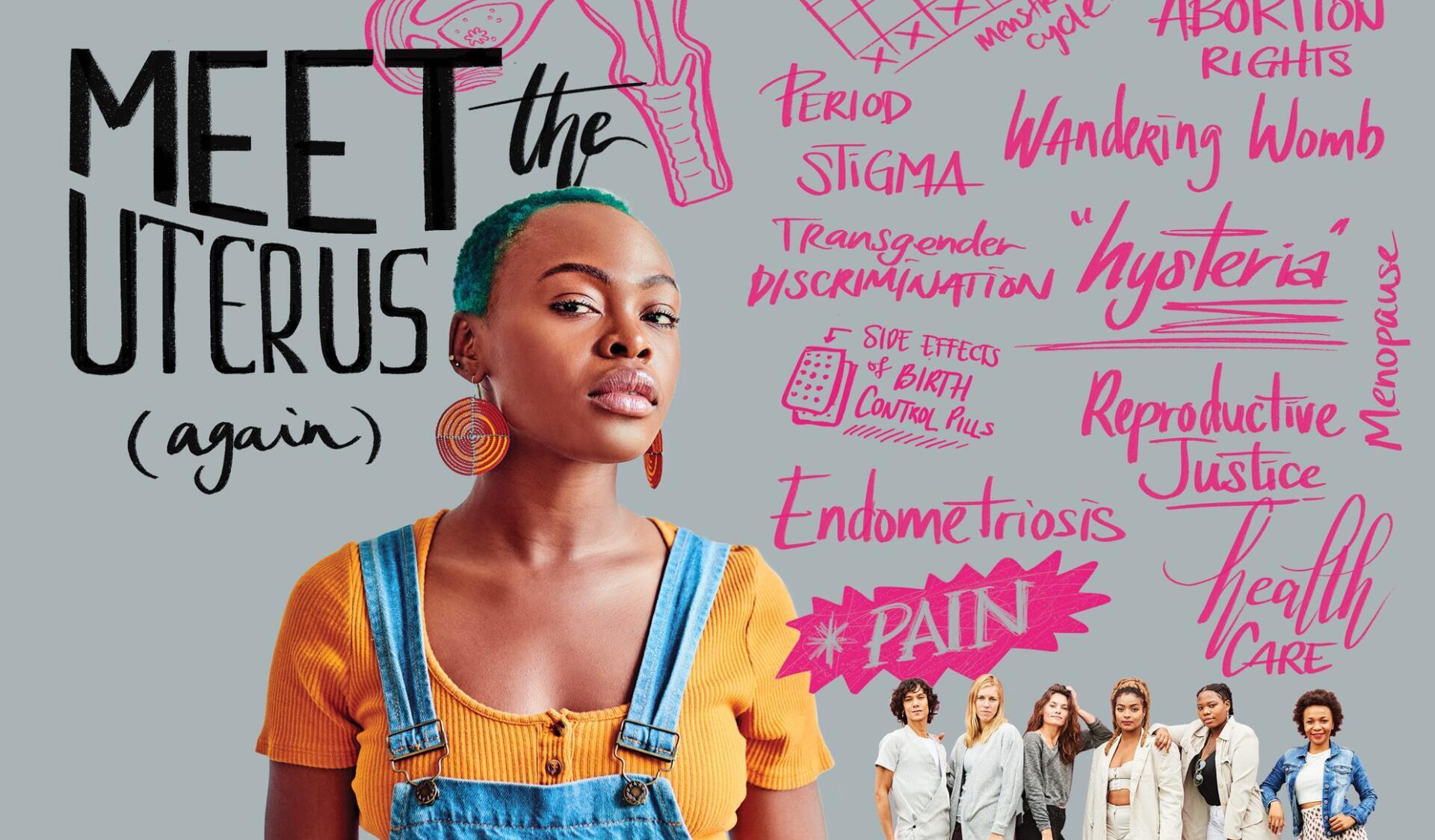
Meet the Uterus (again)
Over half the world’s population have a uterus, yet uterus health remains shrouded in stigma and misinformation.
Illustrations by Xander Sutjiadi and Alena Romanova
Like an animal within an animal. For centuries, medical professionals have overlooked and understudied women’s health, including the health of transgender and non-binary people. For people with uteruses – especially people who are racialized, fat, queer, or disabled – their concerns are often overlooked, to the detriment of their overall health.
The ancient Greeks believed that the uterus wandered through the body. In the second century AD, Greek physician Aretaeus of Cappadocia wrote that “on the whole, the womb is like an animal within an animal.”
In the centuries following, the ‘wandering womb’ hypothesis became the foundation for hysteria (stemming from hystera, the Greek word for uterus), a pseudoscientific term used as a blanket diagnosis for conditions ranging from anxiety and insomnia to fainting, hallucinations, and infertility. Today, ‘hysterical’ is used in a sexist fashion to pejoratively describe emotional expression by women, trans and non-binary folks, and other feminine-presenting people.
The irony in this usage of hysteria is that the uterus is a pretty fucking stellar piece of biology. It is high time for a reintroduction – today, this organ is the star of our show.
In brief, the uterus, or womb, is a hollow pear-shaped organ that sits between the bladder and rectum. Fallopian tubes connect the top of the uterus to the ovaries, where eggs are stored, and the cervix connects the lower end of the uterus to the vagina.
About 20 per cent of people with uteruses have one that is tilted; some have a bicornate uterus, with two bumps that make it look like a heart instead of a pear. In rare cases, a person can be born with two uteruses – or none at all.
Pain is completely and totally expected for a uterus
I got my first period not long after my 11th birthday. One minute, I was playing The Sims 2 on the family computer, and the next, I found myself in the bathroom screaming, “I’m dying of a hemorrhage.” I remember my mum swooping in with a scratchy white thing to put in my underwear, a hot water bottle, and ‘the talk,’ and feeling relieved when the ordeal was over.
Beginning in their teen years, people with uteruses become accustomed to experiencing pain. While the pain of dysmenorrhea (period cramps) is a biological inevitability for many, its normalization and dismissal are social, financial, and political issues.
People’s experiences of menstrual cramps, which happen because prostaglandin hormones encourage the uterus to expel its lining and contract, differ drastically. On the most severe end of the pain spectrum are people with endometriosis, a condition in which the tissue that usually lines the inside of the uterus – the endometrium – grows on the outside. Without access to the cervix, the tissue has no way to exit the body and builds up, causing extreme pain, scarring, and cysts.
“It currently takes people an average of seven years to get a diagnosis for endometriosis in both the U.S. and Canada. Endometriosis is one of the most painful conditions in the world and can gravely impact a person’s quality of life and fertility,” says Lux Perry, the founder of somedays, a sustainable period product business in Vancouver, Canada.
For people of colour, particularly Black and Indigenous women, and trans and non-binary people, the normalization of menstrual pain is exacerbated by a healthcare system that fails to serve them equitably. In 2016, researchers at the University of Virginia found that 40 per cent of medical students surveyed believe that Black people have thicker skin than white people and therefore feel less pain.
“African American women are constantly being misdiagnosed and have limited resources around endometriosis,” says Lauren R. Kornegay, founder of Endo Black, an organization that advocates for health equity.
After being diagnosed with endometriosis in 2015, Lauren founded Endo Black to bring endometriosis and the Black experience into conversations around reproductive justice. Through their period care initiative, the organization has collected and donated over 10,000 period-care products for young girls and domestic violence survivors in the Washington, D.C. area.
The pain of periods is not just physical. In Canada, 25 per cent of people who menstruate have faced financial hardship in securing period products. In rural communities, a box of tampons can sell for $16 to $45, with these high costs contributing to the shame and secrecy surrounding periods.
For transgender men and non-binary people who use menstrual products, there is little gender inclusivity to be found in the period aisle or in the broader realm of gynecological care.
“Having a period already causes me a lot of [gender] dysphoria, but this dysphoria becomes heightened when I have to shop for a product that is labelled as ‘women’s health’ and in most cases, is pretty and pink,” says Kenny Jones, a transgender man, in an interview with NBC News.
When people with uteruses reach middle age, menstruation ends, and menopause brings new pains and discomforts. Menopause is a natural (or induced) process that occurs as the ovaries age and slowly stop releasing hormones and eggs. The menopausal transition can bring hot flashes, trouble sleeping, pain during sex, moodiness, irritability, depression, or a combination of these symptoms.
Menopause also brings social shame and stigma. For many people with uteruses, particularly those who grew up socialized to fulfill the role of mother, the end of their reproductive period can feel scary. With menopause comes the fear of ageism, a bias that relies on the harmful stereotype that older people are of less value to society or more of a burden on social systems.
“I’ve had many people ask me when I’m retiring, assuming that I’m no longer valuable to the workforce,” says my mum, Antoinette Blain, who is 55 years old. “If I were a man, they would assume I have a high-powered profession. People question the abilities of middle-aged women, and it is no doubt related to the idea that menopause marks the end of the most ‘valuable’ part of your life.”
“There has been no sanction for the collective denigration of the menopausal woman,” says Breeda Bermingham, founder of Midlife Women Rock Project. “The language habitually used around this life phase is overwhelmingly negative, something that is impacting how women navigate these years.”
Could you stop uterus-ing for a moment?
The same hormones that prompt the uterus lining to build up – estrogen and progesterone – also trigger ovulation, the process of an egg leaving one of the ovaries. During ovulation, if an egg meets a sperm cell, fertilization is possible. While pregnancy is a hoped-for outcome for some, for others it is absolutely not.
Contraception has been used for thousands of years, with the earliest methods dating to long before the ‘wandering womb’ era.
The invention of the birth control pill in 1956 was a game changer, allowing (some) women more control over their sexual experiences. Hormonal contraceptives like the pill work by stopping ovulation and thickening the mucus in the cervix and uterus to prevent sperm from entering.
This progress was not without exploitation and controversy. The U.S. Food and Drug Administration required additional testing before eventually approving the pill for sale on May 9, 1960. To meet these requirements, pharmaceutical companies conducted their first large-scale human trial of oral contraceptives in the 1950s, testing the pill on Puerto Ricans living in public housing.
“Most of these women [in Puerto Rico] really did understand why they were taking the pill. They may have been poor, but they certainly had aspirations for their families,” writes Margaret Marsh in her biography of John Rock, one of the scientists behind the birth control pill.
Today, contraceptives are almost exclusively made for and marketed to women, though male-targeted methods like condoms and vasectomies come with fewer risks and side effects.
One of the biggest arguments against a similar pill for sperm-carriers (the loudest detractors are cisgender men) is the long list of potential side effects. To people already taking birth control pills, this argument is frustrating – side effects from birth control pills for people with uteruses include hypertension, strokes, blood clots, and heart attacks. To highlight the absurdity of this argument, TikTok user Sienna Quast created a dress made entirely from one sheet of birth control side effect information.
As another option, my friend and fellow community organizer, Joy Gyamfi uses an intrauterine device (IUD) as her preferred method of birth control. There are two main types of IUDs: a hormonal IUD, which uses hormones similar to the birth control pill and works for three to five years, and a copper IUD, which causes an inflammatory response in the uterus that blocks or kills sperm and works for up to 10 years.
To learn more, I watched a quick video about IUD insertion. The procedure is simple – a speculum is inserted into the vagina, and an inserter releases the small, T-shaped device through the cervix and into the uterus. Then, I checked the comments on the video. “The most painful experience of my life!”, writes one user. “I cried for days after this,” another says. Unsurprisingly, a Kinsey Institute survey found that 76 per cent of people surveyed cited ‘fear of the pain’ as a deterrent to getting an IUD.
“I remember taking the bus home and feeling every single speed bump; it was so painful,” Joy tells me. “The doctor had told me I would feel ‘slight discomfort’ which led to me totally underestimating the pain. I tried to convince myself that I am strong and can do this, but I felt like dying.”
Like many patients, Joy wasn’t offered any sedation or numbing to assist with IUD insertion, an invasive procedure akin to a colonoscopy. While patients can ask for pain relief, many are unaware the option exists, or do not feel empowered to ask.
So, when will you have kids?
Using your uterus to grow a fetus in the hopes of having a child is a huge fucking decision. At the same time, becoming pregnant and parenting a child are normalized and expected choices for people assigned female at birth.
“So, when will you have kids?” comes the presumptuous question at every event from family reunions to networking brunches. (This is not a question cisgender men are plagued by or, conversely, one that queer and trans people are asked as frequently.) Often, the question is less about genuine curiosity and instead used as a microaggression stemming from a pronatal bias.
Motivated by demographics, economics, or military needs, governments around the world have attempted to limit or encourage population growth by using tools like the one-child policy (China), the baby bonus (Singapore), or baby box programs (Finland). Some pronatalist policies have more nefarious roots. To grow a large population of ethnically Italian people, Mussolini enacted a ‘bachelor tax’ between 1927 and 1943 amounting to nearly half of a single man’s salary. Similarly, governments in South Africa enacted policies to grow the white settler population to be equal to or more than the native Black population.
In July 2022, The Times published ‘Should we tax the childless?’, a controversial opinion piece by Paul Moreland, an Oxford professor. In Moreland’s opinion, the U.K. should introduce a “negative child benefit tax” and “use the funds to fix the U.K.’s broken, expensive, early-years care system” and “sacrifice the preserved green space around London for more housing…and send a telegram from the Queen to everyone who has a third child.”
While there are many good reasons to incentivize people to have children by offering tax breaks, financial supports, and other resources – punishing childfree people is another matter. Taxes on childfree people, along with anti-abortion and forced birth policies, present a dystopian future for people who don’t want to or can’t have children.
On TikTok, Dr. Alli Cain shares a growing list of reasons not to have kids – last I checked, there were 115 – yet she herself has children and runs a business providing postnatal care.
“I share this information… not to scare you, but to empower you,” she says in one video. Her take is a refreshing one, as many young people reject the social expectations of previous generations and grapple with increased living costs and climate risks.
As I approach 30, I genuinely cannot decipher if the broody feelings I have about childbirth are biological or a result of one of the heteropatriarchy’s most successful propaganda campaigns. My plan – and I am so lucky to be able to plan – is to educate myself as thoroughly as possible.
Luckily, I have a midwife on speed dial.
Harriet Dawkins-Costello and I became besties in a 2005 food tech class. Today, she works as a community midwife in the U.K. and agreed to answer my questions about childbirth.
“The latent phase of labour is a big one!” Harriet says. This stage involves irregular, increasingly frequent contractions as the cervix primes to dilate. The latent phase can begin days before active labour and, like waters breaking, does not necessarily signal that birth is imminent.
“Everyone is different and the more experience I have, the less I expect consistency because people surprise you,” Harriet says. “But…if it’s your first baby, you are in for the long haul once contractions start.”
“Another big shock my clients face is how long you can bleed for after giving birth,” she says.
Lochia – a vaginal discharge that consists of blood, mucus, uterine tissue, and fetal membranes – starts like a heavy period and eventually eases up to a white-yellow discharge. As the uterus contracts to its original size, the hormone oxytocin can step in during chest-feeding, causing random spurts of bleeding and more contraction-like pains.
The pain of vaginal birth is one of the few un-sugar-coated realities – perhaps because our mothers won’t let us forget it. And yet, the use of pain relief is still controversial.
“Scratch the surface of the natural birth movement, and you’ll find disturbing, decidedly anti-feminist roots,” writes Ellie Slee in The Establishment. While some may choose an unmedicated birth, the ‘natural birthing’ movement has its origins in the sexist desires of doctors like Fernand Lamaze, who ranked his patients from ‘excellent’ to ‘complete failure’ based on how vocally they expressed their pain during childbirth.
“Other male obstetricians such as Robert Bradley and Grantly Dick-Read (his real name, I shit you not), both sons of farmers, developed techniques for unmedicated births based their methods on delivering calves,” says Ellie, who also writes that Dick-Read’s motivation to meddle in birthing practices was based on his belief that “inferior races” were having more children, causing a “race suicide” of the white middle class.
Dr. Bradley, who wrote a book on ‘husband-coached’ childbirth, “literally trademarked mansplaining giving birth,” Ellie writes.
Beyond pain relief, social shaming extends to other birthing and parenting choices, like chest-feeding and caesarean deliveries.
While chest-feeding has many benefits, it is a personal choice or necessity to breast, chest, bottle, or tube feed. Tellingly, La Leche League, an organization that supports breast (chest)-feeding, was founded by a group of Catholic women who believed mothers who worked outside the home (and therefore more likely to bottle feed) were failing in their womanly duties.
The C-section is the most performed surgery in the world, yet “C-sections are seen as something you have because you couldn’t be bothered to put the work in,” Harriet, the midwife, says. “There’s so much judgement around people’s decisions regarding pregnancy, birth, and parenting. Ultimately every pregnancy, person, and baby is so different – there’s no point even comparing!”
While C-sections should not be shamed, some medical professionals are raising concerns about the frequency with which the invasive surgery is performed, especially in North America. “Caesarean birth can be life-saving for the fetus, the [birthing parent], or both,” says the National Accreta Foundation. “However, the rapid increase in caesarean birth rates without clear evidence of improved maternal or infant outcomes raises significant concern that caesarean delivery is overused.”
In the U.K. and Finland, 24 and 16 per cent of births, respectively, involve C-sections. In contrast, one in three U.S. births are via C-section (up from one in five in 1996), while birthing-parent mortality rates have also increased. In a for-profit healthcare system, doctors and hospitals can make several hundreds of dollars more by facilitating a C-section instead of a vaginal birth, while also reducing birthing times and
legal risks.
For some, pregnancy does not result in a new life. An estimated 23 million pregnancy losses occur every year worldwide, equalling 44 losses per minute. When Meghan Markle spoke out about her experience of pregnancy loss in 2020, many were shocked but also comforted by her candour and vulnerability.
“Despite the staggering commonality of this pain, the conversation remains taboo, riddled with (unwarranted) shame, and perpetuating a cycle of solitary mourning,” the duchess wrote for the New York Times.
The stigmatization of pregnancy loss is (yet again) connected to the overwhelming pressure for people with uteruses to reproduce. In some cultures, the stigma extends to beliefs that pregnancy loss is a result of witchcraft, a curse, or a punishment for some wrongdoing. Even the etymology of the word ‘miscarriage’ is telling – signalling failure, misbehaviour, or wrong course of conduct.
In the 1800s, a pregnancy loss may have been seen as a blessing or relief in a time when there was limited access to birth control or safe abortions.
As science and public health progressed, “the prevailing narrative, especially among white, middle- and upper-class women, became that, essentially, all ‘kept’ pregnancies are wanted pregnancies,” writes Jessica Zucker in Vogue.
Ultimately, pregnancy losses and stillbirths can be extremely difficult and require trauma-informed care, empathy, and a justice-oriented approach.
No one can use another’s body without their consent
When we think about our heart, lungs, eyes, skin, kidneys, and other organs in our bodies, we rarely think about them being used by others. People who donate kidneys to relatives or register to become organ donors do so with choice, intentionality, and free will.
The uterus, on the other hand, is the only organ that comes with an assumption that it will be used by another entity. People with uteruses grow up surrounded by messages, albeit tied up in pretty bows, that this particular organ is more the state’s property than their own.
‘Reproductive organ’ is a descriptor of the uterus’ potential, not a requirement of its function.
The anti-abortion rhetoric relies on the belief that a fetus is as much a living human as the person whose womb it occupies.
The overturning of the Roe v. Wade ruling does not mean “more strollers pushed, more report cards given, more little league games played, and… more lives well-lived,” as Mississippi Governor Tate Reeves insists. Rather, it means more burdened families, more poverty, more risky abortion procedures, and more domestic violence. (Homicide is the leading cause of death for pregnant people in the United States.)
For abortions to be safe, people with uteruses need equitable laws, supported by education and awareness programs.
“For me, storytelling is a really powerful way to demystify abortions,” says Julia Santana Parrilla, creator of So, I Had An Abortion… “I’ve had two medical abortions and for the first, I felt really prepared. I was surprised by how little fuss there was in the process.”
With her first abortion, Julia had an injection at the clinic and then was instructed to insert pills vaginally – mifepristone to stop the production of progesterone and misoprostol to relax the cervix and contract the uterus.
“I was lucky to not experience too many of the serious side effects. I took some ibuprofen and Gravol, then smoked some weed. There was some cramping, and a lot of bleeding, but then it was over in a day. It was just like a heavy, clotted period; it didn’t feel unfamiliar.”
Julia’s second abortion was more complicated. After taking the prescribed pills, a follow-up scan showed that the embryo had not left her uterus, so she had to repeat the process. This time, her body released the embryo whole, with no bleeding.
“I felt like I wanted to honour [the embryo] and the work my body had done – it felt weird to flush it down the toilet. I did a little ritual for myself and buried the embryo in the planter that houses my apple tree,” she says. As the apple tree blossoms each spring, Julia honours the labour of her uterus in holding an embryo, while also honouring her own desire for the embryo not to become anything more than a clump of cells.
How about no uterus at all?
So, you don’t want a uterus anymore? A very valid choice after reading all this.
Some people – born intersex or with Mayer-Rokitansky-Küster syndrome, for example – are born without uteruses and, if they wish to get pregnant, modern medicine allows for uterus transplants. Just over 60 transplants have been performed since the procedure was developed in Sweden in 2014, resulting in 18 live births. While still very hypothetical, future advancements may allow trans women to receive uterine transplants.
Other people are born with a uterus (or two) and have it removed later in life. A hysterectomy can be a partial or full removal of the uterus and potentially also the ovaries, fallopian tubes, and cervix.
For some, a hysterectomy is medically necessary. In consultation with their doctor, a person may have their uterus removed due to untreatable menorrhagia (heavy, prolonged menstrual bleeding), endometriosis, pelvic inflammatory disease, fibroids, uterus prolapse, or cancer.
Endometrial cancer is predicted to become the third most common type of cancer with mortality rates increasing by almost two per cent per year, according to a study published in JAMA Oncology. Black people with uteruses die of uterine cancer, at twice the rate of white people, the American College of Obstetricians and Gynecologists reports, and are more likely to develop a more aggressive form called non-endometrioid uterine cancer.
For transgender men, a hysterectomy is considered a “medically necessary gender-affirming procedure,” according to the World Professional Association for Transgender Health. In the National Transgender Discrimination Survey, 21 per cent of trans men surveyed had undergone a hysterectomy and another 58 per cent desired one at some time in the future.
While some trans men opt for the surgery because having a uterus feels incongruent with their current gender identity, others do so because proof of ‘sex reassignment surgeries’ are required to obtain legal name and gender changes in some countries.
Given the high rates of conditions like endometriosis and endometrial cancer, it’s worth noting that more than a quarter of the people in the National Transgender Discrimination Survey who reported undergoing a hysterectomy did so for a pre-existing medical condition – in these cases, the surgery may or may not have affirmed their gender.
Regardless of the reason for a hysterectomy, trans folks face significant barriers in accessing the surgery. From misgendering to deadnaming to medical negligence, trans men and masculine-presenting non-binary people can have a challenging time accessing a surgery that is often seen as part of ‘women’s health.’
I’m going into the fetal position
The story of the uterus is a long one – one we have only scratched the surface (the lining?) of.
For many, having a uterus can be a source of joy, affirmation, and growth. For others, it can be an experience riddled with pain, frustration, and injustice. Social and political pronatalists fixate on the uterus, yet often leave the organ unprotected, ignored, and vulnerable to use without consent.
Thanks to activists, inclusive medical professionals, and people willing to share their stories, the future brings hope for more reproductive protection, care, and autonomy. Until then, get your Pap tests and keep fighting the fight.

 Identity