 Identity
Outside the Western World, Matriarchies Still Exist Today
Content warning: domestic, sexual violence
When Rebecca Lolosoli’s husband left their village of Wamba, in the Samburu District in Kenya for a business trip, a group of men attacked and robbed her. They were angered that she had started selling goods in their village.
Soon after, Lolosoli began advocating for rape victims there, who faced attacks by British soldiers, stationed in the area for training purposes for more than 50 years.
This further angered the men, who beat her once again when Lolosoli’s husband went away on another business trip. When her husband returned, he said and did nothing. Her family also urged her to stay by her husband’s side.
That’s when Lolosoli realized she could be killed and that she needed to leave.
Together, with 15 survivors of rape at the hands of the British soldiers, Lolosoli founded the village of Umoja in 1990, one of the few existing matriarchal societies today.
Defined as social systems that give power and authority to women, it is believed by some scholars that matriarchies precede patriarchal systems which exist in the majority today. At least one study has found these societies are better for women’s health. While some of these societies are as small as a few hundred people, others count millions of members.
Umoja is unique in that no men are allowed, kept away by a thorn fence, and houses women fleeing female genital mutilation (FGM), domestic violence and sexual assault.
Below are a few other matriarchal societies that exist today, all belonging to Indigenous societies outside the Western world.

Minangkabau, Indonesia
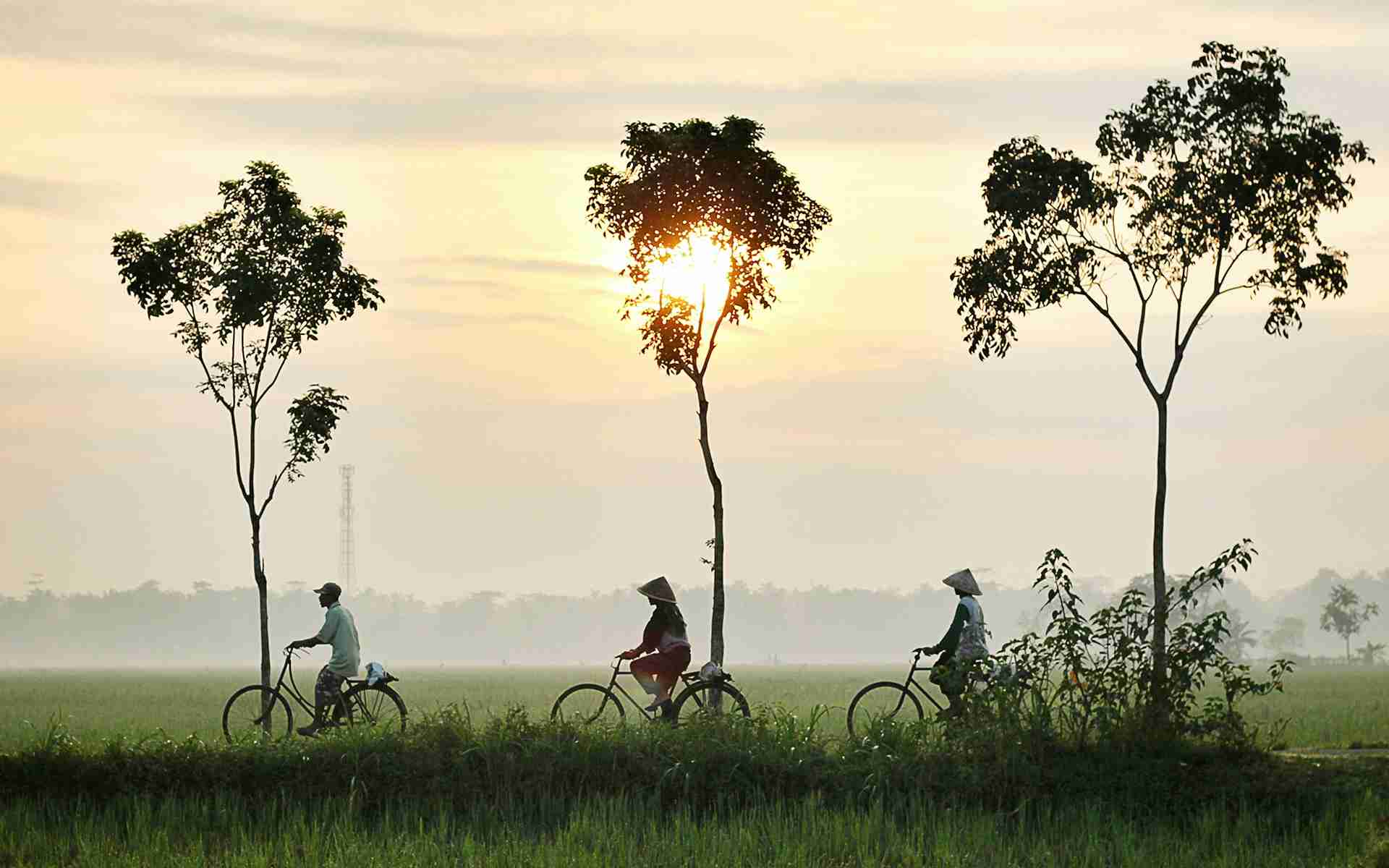
Among the largest matriarchal societies in the world, comprising around 4 million people, is that in the highlands of West Sumara. Mothers are revered as the most important members of society. Here, while marriages with men are allowed, the couple must have separate bedrooms. The matriarchal culture was largely formed because men went off to work abroad, leaving women to deal with land and property matters.
Mosou, China
In Southwest China, the “kingdom of women” is run by the Mosuo women, the country’s sole surviving matriarchy. Lineage is traced through women while property is also handed through them. They practice zouhun, or walking marriage, where women are able to have as many sexual partners as they want. Their homes include a babahuago, or flower room, where these partners stay when visiting. Any children as a result from these affairs are raised in the mother’s house with help from her brothers.
BriBri, Costa Rica
In this Central American Indigenous tribe, land is also handed down from the mother. Additionally, they hold spiritual authority, the only ones allowed to prepare a cacao drink made for religious rituals. The tribe is very connected to their land, resembling many of the rising ecofeminist movements today, albeit one that centers Indigeneity. It is considered to be one of the oldest matriarchal societies in the world.

Urooba Jamal
Contributor (she/her)
Urooba Jamal is a Canadian journalist who writes about global social and political issues. She is pursuing a Master’s degree in Journalism, Media, and Globalization, studying in Europe as a Mundus Journalism scholar. She previously reported on Latin American news and issues from Ecuador. You can follow her on Twitter at @uroobajamal.



 Health