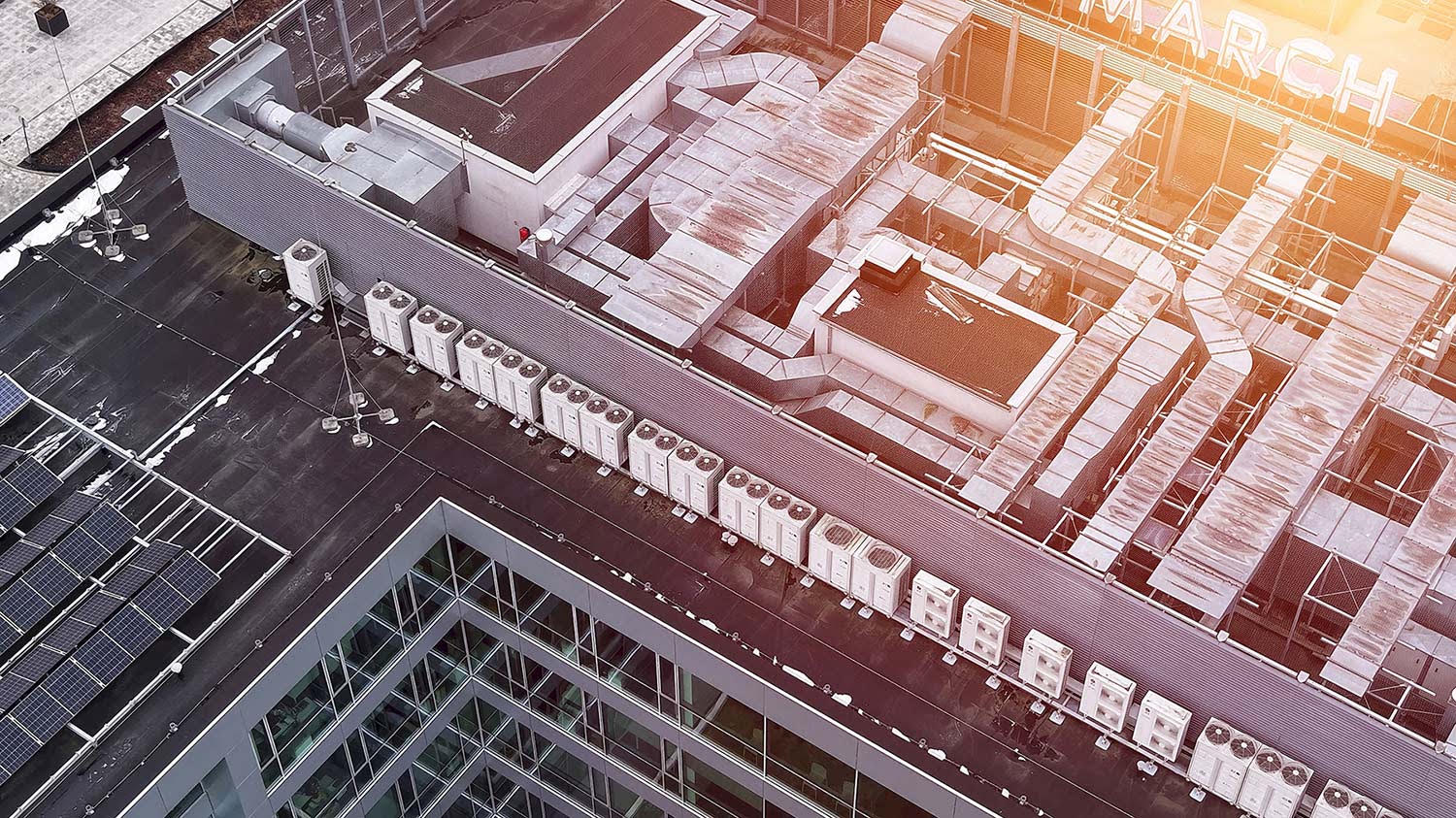
Catching Heat: Data Center Resistance and Recycling
In Odense, Denmark, the winters are cold and the heating bills used to match. Then a data center moved in. Its waste heat became a municipal resource.
The facility runs around the clock, processing data for millions of users across Europe. Its servers generate enormous heat. In most of the world, that heat is vented into the sky as waste. In Odense, it gets captured, piped through a heat recovery system, and distributed into Odense’s district heating network, supplying enough recovered heat for up to 11,000 homes and businesses. The community gets lower energy costs. The data center reduces its cooling burden.
That deal exists because someone asked for it.
Right now, across North America, the infrastructure that powers artificial intelligence is being built at a speed that makes regulatory frameworks look slow and public input look optional. U.S. data centers are projected to nearly double their total energy consumption between 2025 and 2028 — the equivalent of adding a country the size of Spain to the national grid in three years. The water draw is equally staggering: a single large facility can consume up to five million gallons per day, equivalent to the daily use of a city of 50,000 people.
In most places, the communities near these facilities didn’t negotiate the terms. They inherited them.
Boxtown, a historically Black neighborhood on the south side of Memphis, Tennessee, is what that inheritance can look like. The community was first settled by formerly enslaved people in 1863. It already bore the environmental footprint of an oil refinery, a steel plant, and a gas-fired power plant before Elon Musk’s artificial intelligence company, xAI, chose it as the site for Colossus, its supercomputer facility, in 2024.
To get the center running fast, xAI brought in dozens of methane-powered gas turbines, classifying them as temporary “non-road engines” exempt from Clean Air Act permitting. Aerial photography eventually showed as many as 35 running on site, nearly double what local officials had been told. In July 2025, Shelby County granted a permit for 15 of them. The NAACP and the environmental group Young, Gifted & Green appealed immediately, arguing the temporary-engine classification was unlawful and would let any company install unlimited polluting turbines without public review. Six months later, the EPA issued guidance confirming that large methane-fired turbines like xAI’s are stationary sources that require Clean Air Act permits, effectively closing the “temporary engine” interpretation that xAI had relied upon. By then, xAI had already scaled back to 12 turbines in Memphis as a second grid connection came online.
Alexis Humphreys, 28, lives in Boxtown. Days after xAI’s Grok 4 launched as one of the most powerful AI models in the world, she had her first severe asthma attack in 15 years. “It felt like my chest was caving in,” she told TIME Magazine, describing the moment from her front porch.
The Boxtown neighborhood already carries a cancer risk four times the national average. Memphis has received an “F” grade from the American Lung Association for ozone pollution in back-to-back years. Shelby County officials later commissioned an independent air-quality study that found no elevated pollution levels near the site; the Southern Environmental Law Center disputed the test, saying it failed to measure ozone. Both findings are now part of the public record, and the dispute over which one tells the truth remains unresolved.
Data centers do not have to be built this way. But it is what happens when communities don’t have the tools, the time, or the leverage to demand otherwise — and when companies treat the gap between what’s legal and what’s right as a resource to exploit.
What communities are winning when they organize
The people of Boxtown fought back, and they won something real. Memphis Community Against Pollution, a grassroots group led by state representative Justin Pearson, organized residents, funded an independent air study, and pursued legal and regulatory challenges that eventually forced xAI to reduce its turbine count and shift more of its power draw to the grid. The EPA’s nationwide rule closing the temporary-turbine loophole exists in part because Memphis residents made the issue impossible to ignore.
But the fight didn’t end. It moved two miles south, across the state line, to Southaven, Mississippi — and it got bigger.
xAI built a second power plant there to feed Colossus 2, again running turbines without permits while it sought approval. By the time Mississippi’s environmental agency held a public hearing in February 2026, residents were describing a constant industrial drone that rattled windows and disrupted sleep, alongside the familiar complaints about asthma and headaches. The state approved a permit for 41 new turbines anyway. Residents and advocacy groups appealed. Then, even as the appeal was pending, satellite imagery and public records showed xAI quietly adding more: 46 turbines by May, 57 by mid-June, far beyond what any permit allowed.
In April 2026, the NAACP sued xAI under the federal Clean Air Act, joined by the Southern Environmental Law Center and Earthjustice. That should have been a straightforward case: a fifty-year-old law, a company operating without a permit, a federal rule that had already settled the legal question in Memphis. Instead, the Department of Justice intervened — on xAI’s side. In court filings, the Department of Justice argued that enforcing the Clean Air Act against the Southaven facility would harm national security because the site supports versions of Grok used in U.S. military operations. According to reporting on those filings, Defense Department declarations describe the system as supporting operations, including the 2026 campaign against Iran. The DOJ has intervened in support of dismissing the lawsuit, aligning with arguments advanced by xAI and the state of Mississippi. A judge has not yet ruled, and another hearing is expected later in 2026.
Earthjustice called the DOJ’s move an attempt to give itself veto power over citizen lawsuits, a legal tool that has protected communities from illegal pollution for fifty years. The Southern Environmental Law Center called it a power grab.
At that point, the data center story stops being only about water and air, and becomes a test of whether ordinary legal protections survive contact with a company whose product has been folded into national security infrastructure. It is a much harder fight than the one Boxtown won. It is also why the fight matters more than ever.
Data Center Watch has tracked the scale of that resistance: between March and June 2025 alone, organized opposition contributed to approximately $98 billion in proposed data center projects being delayed or canceled. By late 2025, the group had counted 25 cancellations tied to local objections, along with temporary moratoriums or pauses in at least 14 states while communities and policymakers considered new rules.
The communities that organized got real concessions: a federal rule change, a reduced turbine count, a public record of harm. The communities that didn’t, or whose fights ran into a federal government willing to intervene against them, got Southaven.
The model that works
Across North America and Europe, a clearer picture is emerging of what responsible data center development looks like. The tool that makes it possible is called a Community Benefit Agreement, or CBA.
A CBA is a legally binding contract negotiated between a developer and the community before a project breaks ground. The specifics vary, but the effective ones address the same set of issues: water usage caps and recycling commitments, energy sourcing, noise and light controls, local hiring and workforce training requirements, direct community payments, transparent reporting through public dashboards, and what happens if the company doesn’t deliver.
In Lancaster, Pennsylvania, a CBA committed participating data center campuses to negotiated limits on water use, air emissions, noise, renewable energy procurement, and community investments. In Pima County, Arizona, a proposed facility committed to 100% renewable energy, an air-cooled design that uses no water for cooling, and $15 million in community investments targeting STEM education and trade apprenticeships, with local union labor guaranteed in the construction phase. In Umatilla, Oregon, Amazon partnered with local stakeholders on projects that reuse portions of data center cooling water for agricultural irrigation, illustrating one approach to reducing competition over water resources.
These agreements are what companies agree to when communities show up with enough organization to require it.
The tax incentive problem is the harder negotiation. State and local governments have historically offered generous tax breaks to attract data center investment, often without requiring much in return. A hyperscale data center can operate on 30 to 100 permanent employees while receiving tax abatements worth tens of millions of dollars — meaning schools, roads, and public services lose revenue while the community gains little in lasting employment. States that previously offered these incentives without conditions are now reassessing them under pressure from organized opposition, with 27 states currently considering legislation that requires data centers to bear the costs of new energy infrastructure rather than shifting them to ratepayers.
The heat we’re already producing
The Odense example isn’t an anomaly. It’s a design choice that several cities in Northern Europe have been making for years, and that North America has largely failed to adopt.
Stockholm’s Data Parks program has integrated more than 20 data centers into the city’s municipal heating network. Waste heat from those facilities now warms approximately 30,000 apartments. In Denmark, Microsoft is installing waste heat recovery technology at a new data center in Høje-Taastrup, which will produce enough thermal energy to heat around 6,000 local homes starting in the 2025-2026 heating season. Google’s data center in Hamina, Finland, supplies 80% of the annual heating demand for the local district heating network.
Every one of these systems works on the same principle: servers generate heat as an unavoidable byproduct of computation; that heat, instead of being dumped into the atmosphere, is captured through heat exchanger technology and redirected through insulated pipes into community heating networks. None of this requires experimental technology. Data centers already have to remove excess heat; these systems simply capture it instead of throwing it away. Utilities buy the recovered heat, operators offset part of their cooling costs, and nearby residents benefit from lower-emission district heating.
In North America, large-scale waste heat recovery from data centers remains relatively uncommon because the regulatory frameworks and community negotiating structures to require it don’t yet exist in most places. But it’s not impossible. The communities in Europe that benefit from these systems negotiated for them, and in several cases integrated heat recovery into the planning and approval process from the outset.
Data centers are coming either way. What remains unsettled is the deal communities strike before construction begins.
What the resistance is actually doing
There is a version of the data center story that frames organized communities as standing in the way of progress. That version is wrong about the direction of causation, and Southaven shows why it’s wrong even when the fight gets harder.
Communities that organized and demanded better deals — in Lancaster, in Pima County, in Odense, in Stockholm — got better deals. Boxtown’s organizing produced a federal rule change and a reduced turbine count, even if it came slower and smaller than residents wanted. Southaven’s residents organized too, and ran into something new: a federal government willing to argue, through the Department of Justice, that enforcing the Clean Air Act against a politically connected AI company threatens national security.
That’s a genuinely harder problem than a permitting loophole. It can’t be solved by a single community’s organizing alone. But it is also, itself, a direct result of organizing working too well to ignore. The DOJ doesn’t intervene in cases nobody is winning. Earthjustice and the Southern Environmental Law Center are still in court. The NAACP’s lawsuit is still alive. A hearing is still coming in August.
Resistance doesn’t stop data centers. It shapes the terms under which they arrive, and it forces the fight into venues — courts, federal agencies, state legislatures — where the terms can still be contested. The legal pressure from Memphis Community Against Pollution produced the EPA rule that should have settled the Southaven case before it started. The opposition movements in Virginia, Pennsylvania, and Colorado generated the public pressure that moved state legislatures toward transparency requirements and ratepayer protections. The community groups that refused to accept NDAs also exposed how common those agreements had become. Reporting found that roughly 80% of Virginia local governments negotiating major data center proposals had signed confidentiality agreements with developers, limiting residents’ ability to know what was being built next to their homes.
That information exists now because people demanded it. The policies are changing because communities organized. Whether those gains hold against a federal government actively intervening on industry’s side is the next chapter of this story.
The Odense model is possible here. The Lancaster agreement is replicable. The question isn’t whether the infrastructure of the digital economy will be built. It will. The question is who it gets built for, who gets to contest the terms when it’s built badly, and whether that right survives when the company involved is powerful enough to bring the federal government to its side of the courtroom.
HOW YOU CAN CREATE IMPACT:

Find out what’s proposed near you. The Global Data Center Map and Data Center Watch track proposed and existing facilities. Good Jobs First maintains a database of tax incentives offered to tech companies. If something is proposed in your region, public comment periods are where your voice has legal standing — and they close fast.
Know what to ask before a permit is granted. The nonprofit Good Jobs First publishes a free guide — What to ask when a data center wants to come to town — that covers the key questions on water sourcing and recycling, energy procurement, noise and emissions limits, local hiring, and what transparency reporting the company will commit to. It’s written for both community members and public officials.

Advocate for Community Benefit Agreements in your state or municipality. CBAs are currently negotiated project-by-project, which puts the burden on individual communities. Statewide legislation requiring CBA processes as a condition of tax incentives or permitting — similar to what Cleveland has used for economic development projects since 2013 — would shift that burden to companies before they enter a community, not after.
Support the organizations on the ground in Memphis and Southaven. Memphis Community Against Pollution and the Southaven-based Safe and Sound Coalition are the two groups closest to the active fight, including the federal case heading to a hearing in late August 2026. The Southern Environmental Law Center and Earthjustice are representing the NAACP in that case and can use direct financial support. The NAACP’s Stop Dirty Data Centers campaign provides organizing toolkits for frontline communities elsewhere.

Push for waste heat reuse requirements in new permits. In cities where district heating infrastructure exists, requiring data centers to integrate with it should be a condition of approval — not an afterthought. Contact your city council and utility board to ask whether heat recovery requirements are part of current data center zoning or permitting discussions.
Follow the case. Follow the federal litigation involving the NAACP, Earthjustice, the Southern Environmental Law Center, and xAI. Check the court docket for the latest hearing schedule before relying on published dates. Its outcome will set precedent for whether national security claims can be used to override citizen enforcement of the Clean Air Act at AI data centers nationwide — not just in Mississippi.







 Identity
 Health