 Health
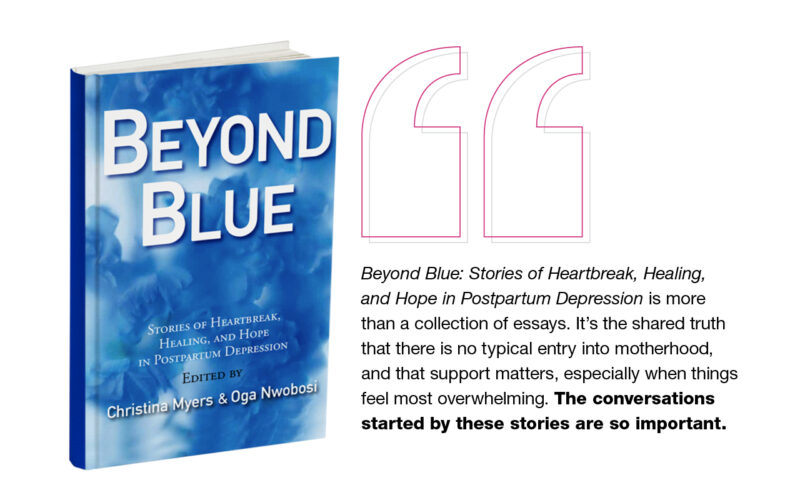
Beyond Blue


26 Stories of Heartbreak, Healing, and Hope in Postpartum Depression.
Introduction by Beyond Blue Contributing Author Jenn Wint
Each of my postpartum experiences has been different. Different babies, different circumstances, different versions of me as a mother and a woman. Something the two experiences shared though, was a deep sense of loneliness. An uneasy feeling that I wasn’t doing it right, and that no one else could be experiencing motherhood the way I was.
When the opportunity to contribute to Beyond Blue, an anthology on postpartum depression and anxiety came up, I felt both excited and terrified. Excited to break stigma because postpartum mental health is still so often misunderstood. Terrified because these experiences live close to my heart, and sharing them requires a vulnerability I was scared to re-visit.
Reading the other stories in this anthology shifted that vulnerable feeling. Across 26 unique voices and many different journeys, I saw how common feelings of maternal isolation are. Mothers carry doubt, grief, fear, and loneliness in silence yet I saw a glimmer of myself in every story. This book is proof that while postpartum can make you feel profoundly alone, it is also an experience that binds so many of us together.
Beyond Blue: Stories of Heartbreak, Healing, and Hope in Postpartum Depression is more than a collection of essays. It’s the shared truth that there is no typical entry into motherhood, and that support matters, especially when things feel most overwhelming. The conversations started by these stories are so important.
Beyond Blue has been named one of the finalists in the anthology/short story category for the Canadian Book Club Awards. Here is an excerpt from the chapter written by one of the book’s editors Oga Nwobosi.
At Last
By Oga Nwobosi
After
I am drowning. I can’t breathe. Part of me just wants to give up, fill my lungs with whatever this is around me that isn’t oxygen and just be done with it. My heart is racing; could it actually burst from the confines of my chest? If I scream as loud as I can, will that release the pressure inside me? What is that awful screeching? Oh my God, is that me?
Before
I loved being pregnant. Everyone told me I looked amazing and I felt even better. When I found out I had placenta previa, a potentially life-threatening condition where the placenta covers the opening of the uterus, I refused to panic. I was a journalist, so I did my research. It meant a scheduled C-section, which meant no painful labour and delivery. In truth, I was a little relieved. I’d already had abdominal surgery for endometriosis years before, so I’d been there, done that. Everyone marvelled at how well I took the news, how genuinely happy I was. I was on top of the world.
After
I can’t feel my legs. Aunts, uncles, nieces, nephews, friends, a couple of people I barely know are standing around my hospital bed; they all want to hold the baby. Am I allowed to say no? Are their hands clean? Who’s holding the baby now? I’m losing track. I’m exhausted and I fall asleep. I startle awake and in that split second of relief I realize it was all a terrible nightmare. I blink. Damn, I’m still here. It’s real. I still can’t feel my legs. And my baby is still being passed around to people whose hands are not clean. Oh my God, who just sneezed? When will this spinal anaesthesia wear off? I need to get out of here. I am not okay. Physically, emotionally, I’m really, really not okay. No one has even noticed me. I pretend to be asleep. I need time to quiet the screaming in my head.
Before
The evening before my son was born, I stuffed my pregnant body into my little red sports car and took a wild highway joyride. I sang at the top of my lungs as I weaved in and out of traffic, watching the sun setting behind me, beyond excited for the adventure ahead. I imagined my baby strapped in his car seat, riding shotgun next to me, convertible top down, “Baby Beethoven” playing, passersby thinking, What a cool mom. That kid is so lucky.
After
I am failing him. I am going through the motions, but I’m dead inside. He must see it, must feel it. I look at him and wonder if he knows. I smile because I’m supposed to, but it doesn’t reach my eyes. I’m drowning, gasping for air, desperately scrambling for a lifeline. For most of my adult life I didn’t want kids. Is this my punishment for waiting until a week shy of my thirty-sixth birthday to have my first child? I’ve made a mistake—a terrible, awful, irreversible mistake.
Before
I read just about every baby book ever written. I will breastfeed because that’s what my body was made to do. He’ll suckle and we’ll gaze into each other’s eyes and feel utter and complete love. I’ll swaddle him and he’ll fall asleep in my arms. He’ll be the best thing that’s ever happened to me. Yes, I’ll be tired, obviously, but mostly it will be bliss.
After
Why won’t he stop screaming?
My body isn’t making enough milk but I can’t give him formula because the least I can do since I’m such a shitty mother in every single other way is to breastfeed him because that is literally the only job my breasts are designed to do. I pump and I pump and I pump and I pump and it’s still not enough. That first bottle of formula sliding down his throat takes with it any faint hope I ever had of being good enough. I am crashing and burning and he’s not even a week old. I didn’t see this chapter in any of the books.
Before
When I told my mother I was pregnant she screamed, jumped up and down and danced. She couldn’t stop giggling. Giggling. My mother wasn’t a giggler, but that day she giggled her ass off, she was so absolutely, deliriously over the moon.
After
I tell my mother I think maybe I possibly, kind of, sort of, might have a little tiny bit of postpartum, I don’t know, depression or something like that. She pretends not to hear me.
Before
We went shopping for baby clothes, my mother and I, and she bought the cutest little caramel-coloured sweater with tiny wooden buttons. It had the softest white wool lining. It’s impossible to imagine he’ll be that little, she mused. We talked about baby names, and with tears in her eyes, she told me I’d never looked so happy. Neither had she.
After
I try again to tell her I’m not okay. This time, she makes that sound of disapproval that some African mothers make. It’s like a tsk … but drawn out, tongue against front teeth, lips turned down in a deep frown. It’s a sound that is both judgmental and dismissive. She tells me she doesn’t believe in postpartum depression, as though we’re talking about the Easter Bunny or the tooth fairy. So I don’t tell anyone else.
Before
My friends kept asking if I was planning to sell my sports car. I was adamant that having a baby wouldn’t change me. To me, baby blues described my husband’s eyes, not a condition. And postpartum depression was not on my radar. Not at all. I’d still be fun, I’d still go out all the time and I would most definitely still drive my sports car. I wasn’t planning on missing a beat after the birth of my son. A friend said, “You know you can’t put an infant car seat in the front seat of a two-seater convertible, right?”
Wait, what?
After
My husband is going back to work after taking a month off. The morning is so bright with sunshine, it hurts my eyes. I can hear the loud cacophony of a scold of Steller’s jays in the magnolia tree in the backyard, and it brings me back to our first spring in that house. I remember looking out at the beautiful tree bursting with pink flowers and I could imagine our future children, gathering fallen flowers, tossing them up in the air like giant blush-coloured snowflakes. This day, the tree is bare, flowers long gone from the spring bloom. I want to tell my husband to stay, that I can’t do this without him, that I’m not a normal mother on a normal day in a normal life. There is something going on here that I can’t explain and I don’t want to be left alone with it. But I don’t say a word. He asks if I’m okay and I nod, afraid that if I speak, it’ll all come tumbling out. I won’t cry now; that’s not fair to him. He leaves the family vehicle for me (like there’s any chance I’m leaving the house) and takes my little red sports car to the office. I am standing in a pile of laundry, a howling baby in my arms, puke stains splashed across the same shirt I’ve been wearing for the past three days. I cry silently as I watch him back out of the driveway, top down, bass pumping so impossibly loud I can feel it rattling my teeth. In this moment, I hate him so much I don’t think I can bear it.
Excerpted from Beyond Blue edited by Christina Myers and Oga Nwobosi. Copyright © 2025 Christina Myers and Oga Nwobosi. Published by Caitlin Press. Reproduced by arrangement with the publisher. All rights reserved.
Beyond Blue is available at your local bookstore or through Caitlin Press.
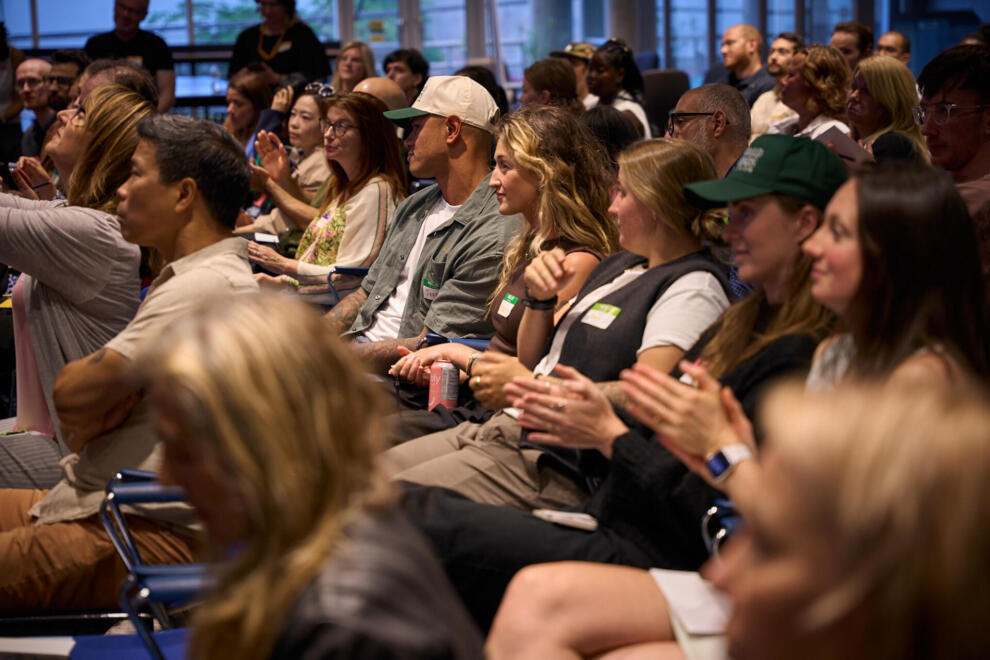
Author Reading: Vancouver BC
On February 5th Iron Dog Books is hosting an in-person reading featuring authors of Beyond Blue.
Iron Dog Books: 2671 E Hastings St, Vancouver BC
Doors open: 6:30 PM
Reserve your free spot here
 Identity