 Health
 Land
LandThe Dirty Truth: Soil contamination & the human cost
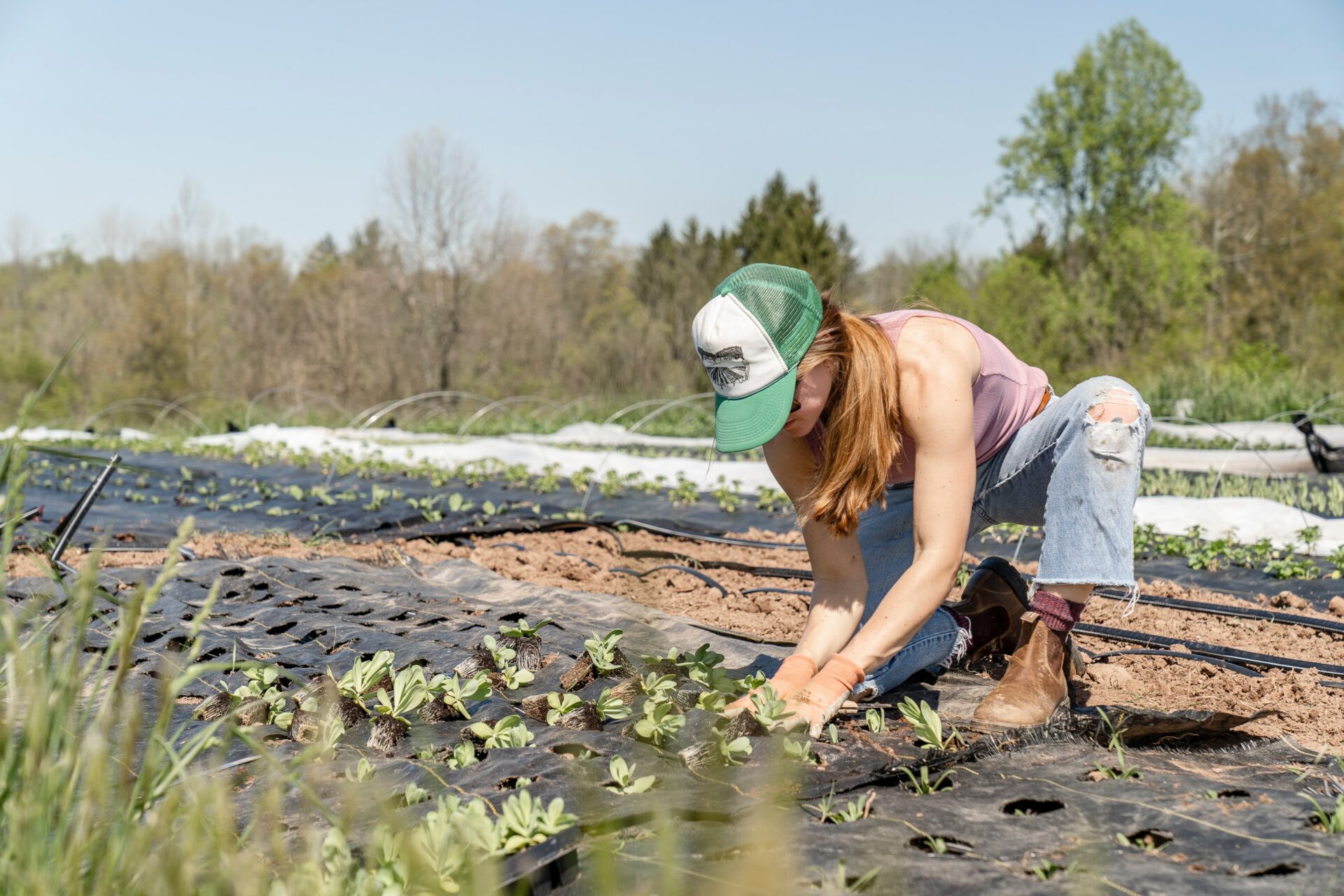
Soil. Most of us walk over it every day without thinking twice about its properties — or head to the grocery store never considering its role in our food systems.
We may have a basic understanding of the fact that soil is essential for growing the food we eat, the trees that give us oxygen, and feeding the animals that provide us with meat and dairy. Beyond that, we may not consider how crucial it is to keep our planet’s soil healthy. It’s life or death.
In the post-industrial age, soil has become increasingly contaminated with chemicals like lead, arsenic, and mercury. These harmful chemicals frequently make their way into our bodies, via our food, air, and water. The consequences can be devastating and the response from governments and corporations is neither fast nor thorough enough.
“Soil is a complex mixture of minerals, organic material, water, and various lifeforms,” explains the Soil Science Society of America. Farmers, gardeners, scientists, and soil aficionados know to look out for a combination of chemical composition (most commonly carbon, hydrogen, oxygen, and nitrogen), fungi, macronutrients like insects and arachnids, saline content, and pH levels to determine the health, usability, and contamination levels of soil.
Soil is often described as ‘earth’s kidney’ because, when in a healthy condition, it has the ability to filter waste and water. A lot of Earth’s soil is contaminated. Of course, chemicals occur naturally, but when a specific chemical exceeds those naturally occurring levels, the soil becomes contaminated and can threaten people, wildlife, and ecosystems.
Soil provides 95% of human food yet, 1/3 of the planet’s land is severely degraded. Fertile soil is being lost at a rate of 24 billion tonnes a year.
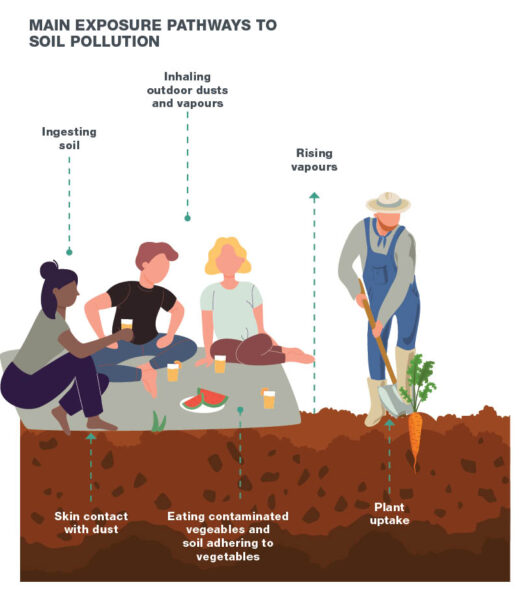
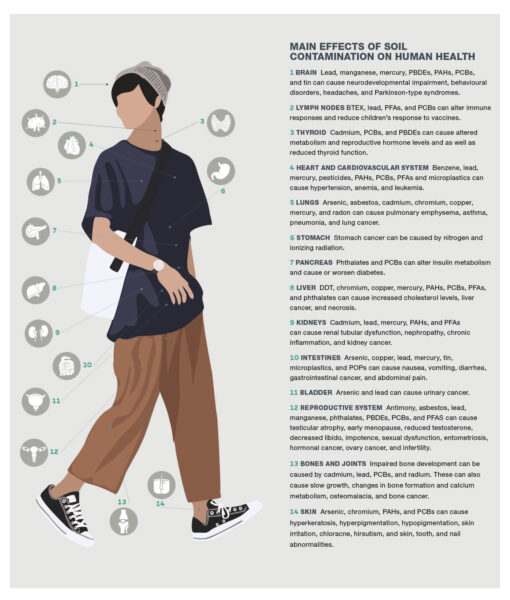
When eaten, food grown in contaminated soil can affect various parts of the human body. While research is ongoing, there is evidence to suggest that pollutants like mercury can cause neurological disorders like autism or cerebral palsy. High levels of nitrogen can cause abdominal pain, while arsenic can trigger nausea, vomiting, hyperpigmentation, asthma, and pneumonia.
Large manufacturing and industrial sites are some of the biggest sources of soil contamination. Often, this is because there are few measures and regulations to prevent chemical leaks. Big brands we use every day are some of the world’s largest polluters. Landfill and junk sites are also major sites of soil contamination. In the United States, 265.3 million tonnes of waste are produced each year. Landfills leech chemicals like lead, arsenic, and petroleum. Highways, farmlands, households, and parking lots also release chemicals into the environment.
Lead — the most widespread soil contaminant — can impact brain development and contribute to aggressive or violent behaviour. Lead exposure affects 800 million children worldwide. Skin contact with contaminated soil is also a major issue — dermal exposure can cause hives, irritation, skin diseases, and various cancers.
The situation is bleak, but there is hope. Around the world, people are working to restore wetlands, change legislation, manage industry and mining waste, and include Indigenous communities in land and water preservation.
How can you help?
Food is medicine. Follow experts in the industry such as Mark Hyman and the Food is Medicine Coaliton.
READ This is Your Brain on Food, a book about how to eat for your mental health and the fascinating science behind nutrition.
CONDUCT a soil test on the soil in your garden before planting anything.
PLANT native trees and plants in your garden.
USE organic, slow release fertilizers in your garden.
SUPPORT the restoration of wetlands, to help facilitate Earth’s natural filtering processes.
JOIN a local streamkeeper or stewardship group and volunteer to remove invasive plants and monitor the health of ecosystems.






 Identity