 Health
I Went In for an Interview Suit and Never Left
Anita David on the Power of Lived Experience, Finding Her Voice and What It Means to Be Named the 2026 Dress for Success Vancouver Inspiration Award Winner
For much of her life, Anita David kept her mental health experiences hidden. She called the feelings, ‘her Monster.’ Today, that Monster is the inspiration behind her work as an advocate, researcher and leader helping to create more inclusive and compassionate health-care systems. Since Anita discovered the power of lived experience advocacy, she has contributed to more than 200 research and engagement initiatives, helping ensure that the voices of those directly affected are included in the decisions that shape their care. Her work has earned her national recognition, including a King Charles III Coronation Medal, a place among Canada’s Top 25 Mental Health Leaders and, most recently, the 2026 Dress for Success Vancouver Inspiration Award.
In this conversation, Anita reflects on the importance of moving beyond tokenism to meaningfully include lived and living experience, the confidence she found through more than a decade with the Dress for Success Vancouver community, and why sharing our stories can create opportunities for others. Her journey is a reminder that personal experience can be a powerful force for systemic change, and that finding the courage to use your voice can help others find theirs.
You’ve built a career around using lived experience to create change. When did you first realize that sharing your own story could help strengthen systems and support others?
I spent most of life hiding my mental health from everyone around me, but even more so from myself. In 2017, I found out that I could use my lived and living experience of mental health to influence research, healthcare projects and advisory groups. The new found ability to inform, educate and influence policy became my opportunity to turn my pain into something bigger than myself. My lived experience has become my superpower. When I became a Dress for Success Ambassador, I finally felt I could share my experiences and witnessed the ripple effect through others looking for resources, support and wanting to share their story. If I can be vulnerable and even one person can see themselves in my story, I will continue to use my voice.
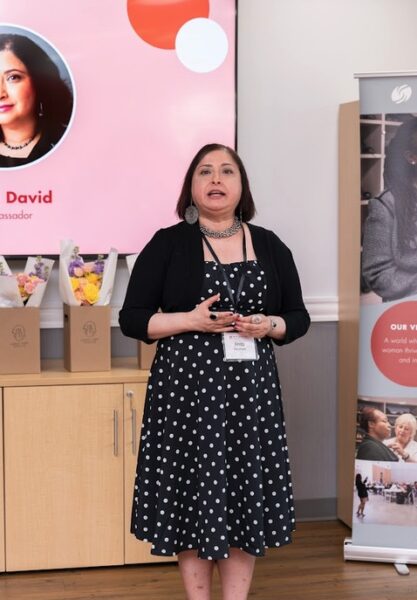
You work across advocacy, research and health care. What does meaningful inclusion of lived and living experience actually look like, and where do organizations still get it wrong?
Including lived and living experience is essential because those with mental health challenges carry the realities and nuances of our experiences in ways that cannot be taught in a textbook. When research or health‑care projects are designed without the involvement of the people most affected, it becomes a missed opportunity with little chance for real impact. Too often, organizations expect lived experience contributors to offer expertise and emotional labour without compensation, creating a clear power imbalance. We are frequently the only people asked to share intimate or traumatic experiences, even when others in the room have similar backgrounds but are not encouraged to speak. Tokenism happens when lived experience is included without clarity on purpose or process. I see this as a learning opportunity and encourage organizations to be intentional in their engagements.
You’ve contributed to more than 200 research and engagement initiatives. What have those experiences taught you about the difference between simply inviting people to the table and truly listening to them?
I’ve learned that every engagement is different. I take the experience from every engagement and even if it is negative, it is important to be in the space. I’ve been part of processes where I was infantilized or clearly tokenized because of my lived experience. I remember being in a high‑level meeting, having a meaningful conversation with a psychiatrist, and watching his body language shift the moment I introduced myself, his discomfort was obvious.
I’ve also been in rooms where I felt seen, heard, and valued. As an ICU (intensive care unit) survivor, I joined a research project and, within six months, approached the lead researcher about using an arts‑based method called Photovoice for data collection. Photovoice invites participants to respond to research questions through photographs based on their experiences, a method I first used in a mental health project. The researcher and I now co-lead projects after she secured funding for a pilot in 2023, and since 2025 we’ve been leading a two‑year scale‑up project.
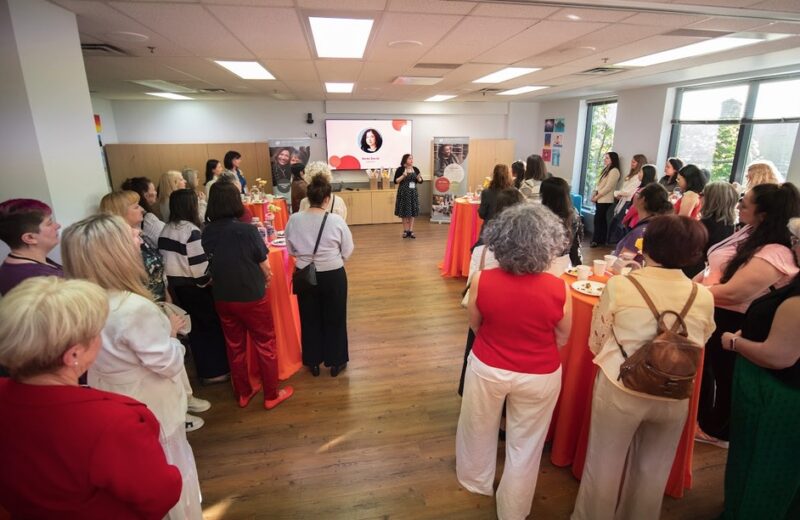
You’ve been part of the Dress for Success Vancouver community for more than a decade, first as a client and now as an ambassador. How has that relationship shaped your own confidence, leadership and desire to give back?
I like to say that I went in for an interview suit and never left. Dress for Success has given me a community of caring women that I hug and catch up with at events like the summer picnic or volunteer appreciation events. As a lifelong learner, I appreciate the monthly learning workshops about a variety of professional and personal topics. I joined the first Working Women’s Group and ambassador cohort because I embrace new experiences, but I never expected to find my voice and speak about my experiences. My involvement with Dress for Success has given me the confidence to follow my dreams and become a leader in the mental health space. I have always cared deeply for people so being able to help others through my advocacy and making space for others with lived experience is very important to me.
The Dress for Success community has offered me a place of belonging, compassion and unwavering support. The staff, volunteers, and others in the programs have helped me rebuild my life and become the woman I am today.
You’ve received significant recognition for your advocacy, including the King Charles III Coronation Medal, being named one of Canada’s Top 25 Mental Health Leaders, and now the 2026 Dress for Success Inspiration Award. What does this recognition mean to you, and what do you hope it helps amplify?
For most of my life, I hid my mental health experiences, so being honoured for something I once felt I had to conceal is deeply meaningful. These recognitions remind me that lived and living experience has real power, not only to shape systems, but to create connection and transformation.
What I hope these awards and recognitions amplify is the value of lived experience leadership. I want to open doors for others, encourage organizations to engage more intentionally, and help people feel seen, heard, and respected in spaces where their voices have often been overlooked. If my story makes room for someone else’s, then the recognition is serving its purpose.
I also want to highlight that mental health challenges are increasingly common and no one is immune over their lifetime. Mental health can affect employment, housing, relationships, health, and so much more. If I can bring awareness to these realities, and encourage compassion and empathy, then I’ve done my job.
HOW YOU CAN CREATE IMPACT:
5 MINUTES: Take a moment to send a message of encouragement to a woman in your life, a colleague, friend or community member. A small gesture of support can strengthen confidence and connection, which is at the heart of Dress for Success.

5 DOLLARS: Donate $5 to Dress for Success or purchase a transit fare for someone who needs help getting to an interview, appointment, or workshop. Small contributions directly support access and dignity.

5 DAYS: Spend the next five days gathering gently used professional clothing or accessories you no longer need. At the end of the week, donate them to Dress for Success (or similar organization in your area) to help another woman step into opportunity with confidence.
5 MINUTES: Check in with someone you care about. A simple “How are you doing today?” can open a door for connection, support, and safety, especially for those who may be silently struggling.
5 DOLLARS: Use $5 to buy a small item that supports mental wellness such as a journal, a calming tea. Also small acts can make a meaningful difference. Buy the coffee for someone in a cafe lineup, something that shows that in a world in flux, kindness still exists.
5 DAYS: Commit to one mental health-supportive action each day for five days – such as talking a walk, practice grounding, having a conversation about mental health or exploring a new stress reduction technique. These small steps help normalize mental health and build compassion in your community.




 Identity